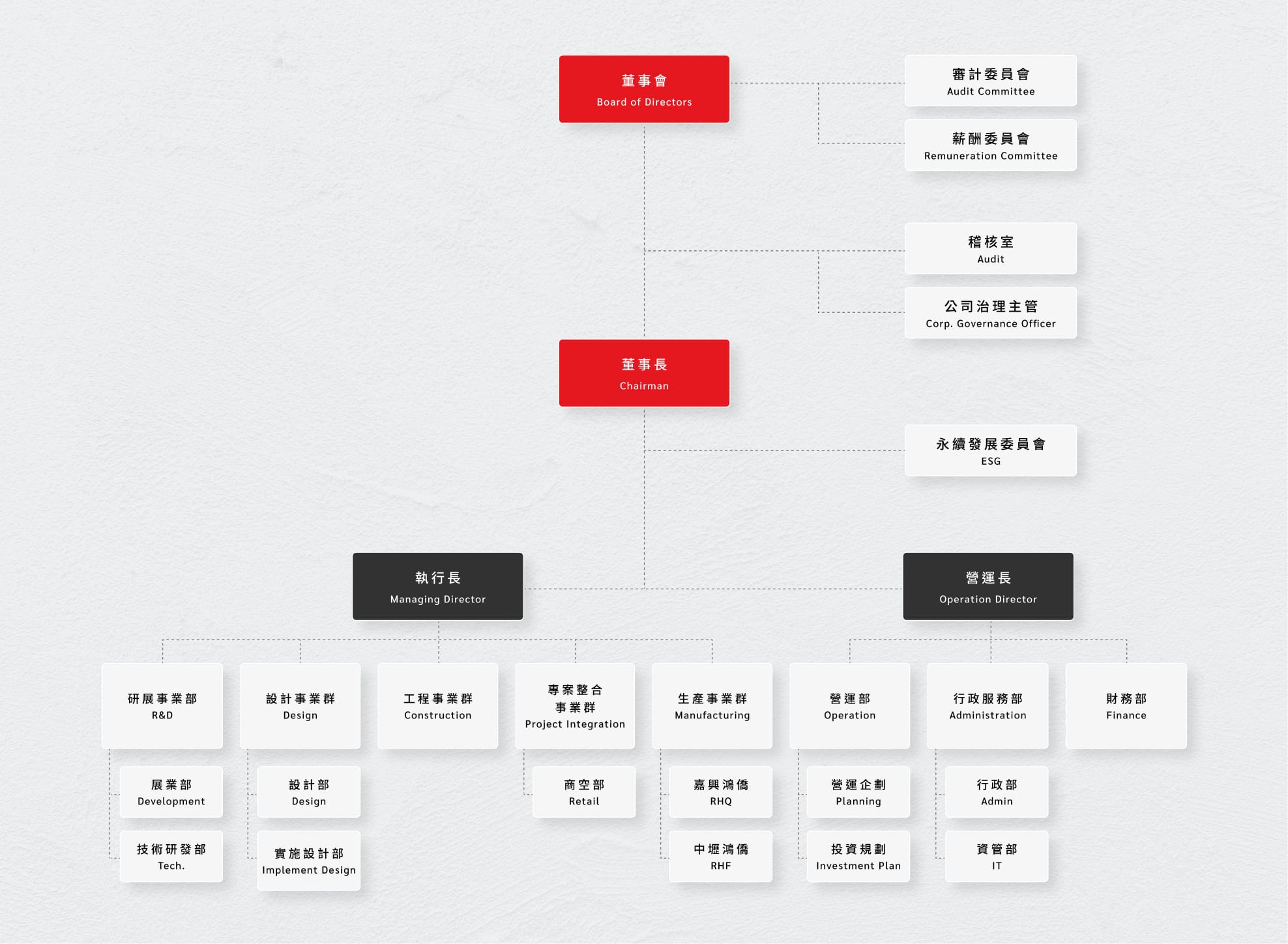
According to the Articles of Incorporation, the Company has 5 to 9 directors with a three-year term.
The current Board of Directors was elected at the 2025 Annual Shareholders’ Meeting on May 28, with 8 members, including 4 independent directors. Directors are distinguished professionals from academia and industry. The board follows a candidate nomination system and cumulative voting under Article 198 of the Company Act, with shareholders electing directors from the nominee list.
The Company values gender balance on the board. Currently, 75% of directors are male (6 seats) and 25% female (2 seats), with efforts to increase female representation in the future.
Note 1:
None of the above directors have any of the circumstances specified in Article 30 of the Company Act.
Note 2:
・Neither the director, their spouse, nor relatives within the second degree of kinship (including through the use of another’s name) hold positions as directors, supervisors, or employees in the Company or its related enterprises; do not hold shares of the Company; and have not received remuneration for providing business, legal, financial, accounting, or similar services.
・None of the directors have circumstances specified in Items 5–8 of Paragraph 1, Article 3 of the “Regulations Governing Appointment and Compliance of Independent Directors of Public Companies.”
To strengthen corporate governance and promote a sound development of the Board’s composition and structure, the Company revised the “Corporate Governance Best Practice Principles” in 2019, adjusting the “Board Diversity Policy.” The policy states that the appropriate number of directors, ranging from 5 to 9, should be determined based on the Company’s operational scale and major shareholders’ shareholding, while taking practical operational needs into account.
The composition of the Board should consider diversity. Directors who concurrently serve as executives should not exceed one-third of the board seats. In addition, the Board should establish an appropriate diversity policy according to its operation, business model, and development needs. This policy should include, but is not limited to, the following two main aspects:
The Company’s Board of Directors consists of eight directors (including four independent directors). Only three directors have a first-degree familial relationship with each other, while the remaining directors have no spouse or relatives within the second degree of kinship, in compliance with Article 26-3, Paragraph 3 of the Securities and Exchange Act.
The Audit Committee assists the board in supervising the integrity and quality of accounting, auditing, financial reporting, and internal controls.
Established on October 5, 2019, the third-term Audit Committee serves from May 28, 2025, to May 27, 2028, composed of all four independent directors. The committee meets at least quarterly.
The Remuneration Committee aims to assist the Board of Directors in implementing and evaluating the Company’s overall compensation and benefits policies, as well as the remuneration of directors and executive officers.
The Company established the Remuneration Committee on September 9, 2019. The fourth-term Remuneration Committee serves from May 28, 2025, to May 27, 2028, and is composed of three independent directors. The Remuneration Committee holds at least two regular meetings each year.
On December 14, 2022, the Board of Directors resolved to appoint Ms. Diane Lo, Chief Financial Officer of the Finance Department, as the Corporate Governance Officer, responsible for matters related to corporate governance.
In accordance with Article 20 of the “Guidelines for the Establishment and Exercise of Powers by the Board of Directors of Listed Companies” issued by Taiwan Stock Exchange Corporation, a Corporate Governance Officer is appointed to be responsible for corporate governance-related matters. The corporate governance-related matters include the following:
Total annual continuing education hours: 36 hours
p>The purpose of internal audit is to assist the Board of Directors and management in examining and reviewing the control operations of internal control systems for various operational procedures, and to assess the effectiveness and efficiency of operations. In accordance with the "Rules for Establishing Internal Control Systems in Public Companies," the Company, taking into account its own operations and those of key subsidiaries, establishes effective internal control systems. These systems are continuously reviewed and improved in response to changes in the internal and external environment, ensuring that the design and implementation of internal controls remain effective.
To ensure auditors carry out their work with impartiality and independence, an independent Audit Office is established under the Board of Directors, staffed with full-time auditors. Currently, qualified and dedicated internal auditors are in place, along with designated deputies. Reports are regularly filed for record in accordance with the format required by regulatory authorities. The appointment and removal of the Head of Internal Audit must be approved by the Audit Committee and resolved by the Board of Directors.
Based on risk assessment results and in accordance with Article 13 of the "Rules for Establishing Internal Control Systems in Public Companies," the Audit Unit prepares an annual audit plan, which is executed upon approval by the Board of Directors. Project audits or reviews are also conducted as needed. The execution of general and project audits provides management with insights into the operation of internal controls and promptly informs management of existing or potential internal control deficiencies.
Internal audit reviews the self-assessment of internal control operations conducted by each unit, including checking whether the procedures are implemented and reviewing documentation to ensure the quality of execution.
To strengthen the professional capabilities of auditors, audit staff are arranged to continuously improve their professional knowledge and skills and to participate in internal audit training programs recognized by regulatory authorities, enhancing and maintaining audit quality and effectiveness.
Through continuous monitoring of the implementation of operational systems by auditors, the aim is to promote sound governance practices, consider risk control mechanisms, and create a sustainable operational environment.
After performing audit procedures, the Internal Audit issues a written audit report, which is delivered to each independent director for review by the end of the following month after the completion of the audit items.
Any internal control deficiencies identified by the Internal Audit should be disclosed truthfully in the audit report, and, after the report is reviewed, followed up. At a minimum, follow-up reports are prepared quarterly until the deficiencies are resolved.
The Head of Internal Audit should report audit activities to the Audit Committee at least once per quarter and attend Board meetings to present reports on the execution of internal audits and the status of internal control operations. In addition to these routine reports, any significant deficiencies must be reported immediately to the independent directors and the Board to uphold the spirit of corporate governance.
Review the self-assessment reports of internal control systems from each unit and major subsidiaries, together with internal control deficiencies and irregularities identified by the Audit Unit. These are submitted to management, the Board of Directors, and the Audit Committee as a basis for evaluating the overall effectiveness of the internal control system and issuing the internal control system statement.
Record Date: March 31, 2026
Welcome to the "Rich Honour Design Corporate Website" (hereinafter referred to as "this Website"). To ensure your peace of mind while using the various services and information provided by this Website, we hereby explain our Privacy Protection Policy to safeguard your rights and interests. Please read the following content carefully.
The Privacy Protection Policy encompasses how this Website handles personally identifiable information collected when you use the Website's services. This policy does not apply to linked websites not owned by this Website, nor does it apply to personnel not commissioned or involved in the management of this Website.
The pages of this Website provide Internet links to other sites, which you may click to enter through the links provided herein. However, the privacy protection policy of this Website does not apply to those linked sites. You must refer to the privacy protection policy of those respective linked sites.
This Website will never provide, exchange, rent, or sell any of your personal data to other individuals, groups, private companies, or public authorities, except where there is a legal basis or contractual obligation.
The aforementioned exceptions include, but are not limited to, the following:
To provide you with the best possible service, this Website places and accesses our Cookies on your computer. If you do not wish to accept the writing of Cookies, you may set the privacy level in your browser's function settings to 'High' to reject the writing of Cookies. However, this may cause some features of the Website to not function properly.
This Website's Privacy Protection Policy will be amended as needed at any time. The revised terms will be published on the Website.